Column · @messiahvqnk180
ADA Certified Portable Toilets: Why 5% of Rental Units Need To Come
If you rent mobile toilets enough time, you quit thinking about them as easy boxes dropped on a jobsite or occasion field. They belong to the public setting. People depend on them at weddings, road fairs, college features, fundraisers, calamity response areas, church gatherings, and neighborhood celebrations. When someone can not use the restroom because the unit is also narrow, the threshold is as well hard, or there is no room to transform or move safely, the issue is not small. It is instant, personal, and avoidable.
That is why the demand for accessibility matters so much in mobile hygiene. Under the 2010 ADA Requirements for Accessible Style, as translated by the Accessibility Board and the Division of Justice, collections of portable single-user bathroom units have to consist of accessible devices. The rule that captures numerous tenants off guard is the 5 percent demand. At the very least 5 percent of the systems in each collection must be accessible, and that uses even at short-term events.
For anyone arranging an ada portable bathroom rental, that number is not an idea and not a politeness upgrade. It is the floor.
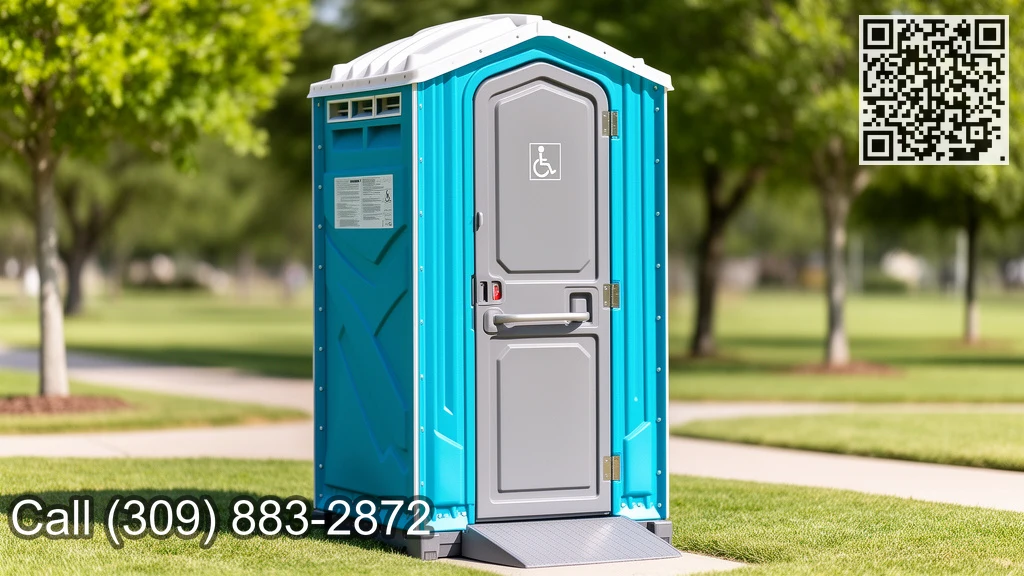
The 5% rule is little theoretically, however crucial in practice
When people listen to 5 percent, some presume the need is marginal enough to deal with later. In genuine rental planning, that is where mistakes begin. Five percent seems tiny till you convert it into actual systems. If a website has a cluster of 20 mobile toilets, at the very least one must come. If there are 40, at least 2 need to be accessible. The factor is not simply math. The point is that every cluster, not simply the occasion on the whole, needs to be considered.
That tail end matters more than several organizers recognize. I have actually seen strategies where someone states, "We have one ADA unit on the property, so we're covered." That may really feel practical on a map, but it misses out on just how people actually move through a site. If the commodes are set up in a number of separate collections, the easily accessible requirement is connected to every collection. A person needs to not need to travel throughout an entire fairground since the only ada easily accessible portable toilet was placed near the primary entrance while the closest toilet bank to their seating location has no available option.
This is also why the Accessibility Board's analysis for short-lived occasions is so crucial. Short-lived does not suggest excluded. A one-day celebration still develops actual obstacles if availability is treated as optional. The same holds true for a weekend sporting activities tournament, a seasonal pumpkin spot, or a neighborhood block celebration that brings in rental bathrooms for a couple of hours. Short duration does not remove the need.
What "obtainable" implies is a lot more certain than "bigger device"
An usual misunderstanding in the area is that any oversize system counts as an available one. That is insufficient. An ada compliant mobile bathroom or ada certified easily accessible mobile washrooms have to fulfill ease of access requirements, not just supply added square footage.
The validated standards point to a number of technological features that matter. The unit must supply the required clearances for the commode area itself. That includes transforming area, door navigating clearances, and suitable rules for grab bars and water-closet clearances. To put it simply, the interior has to work for an individual making use of a wheelchair or other mobility aid, not simply look roomier from the outside.
The entry matters also. An ada handicap easily accessible portable restroom must have an obtainable path and easily accessible entry. If ramps or touchdowns are needed, those aspects also need to follow ADA technological demands. This is one of one of the most ignored parts of the arrangement. A certified unit can still end up being unusable if it is placed on soft ground, at an unpleasant angle, or behind a lip or incline that protects against very easy entry.
There is likewise an identification requirement. Easily accessible portable commode units have to be marked with the International Icon of Ease Of Access. That issues due to the fact that individuals must not need to presume which unit is indicated to offer them. Great labeling is not aesthetic. It becomes part of making access usable in the actual world.
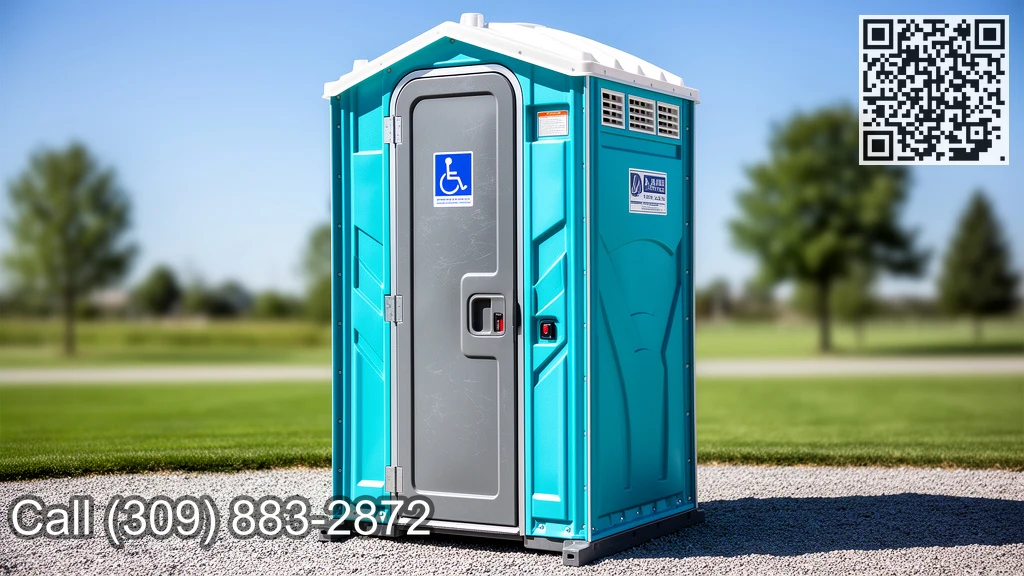
Why the placement of the system can make or break compliance
A portable washroom business can supply a completely constructed ada compliant mobile bathroom, and the site can still create troubles. This is where skilled organizers earn their keep.
Portable sanitation usually obtains designated late in the process, after car park, secure fencing, phases, supplier tents, utility gain access to, and waste pick-up paths are already mapped. Then someone attempts to "fit in" the easily accessible system anywhere there is leftover area. That technique tends to produce the precise obstacles the ADA is suggested to prevent.
Picture a short-term event on a verdant field after rainfall. The conventional devices are established near the side because the service vehicle requires accessibility. The obtainable system is technically existing, yet it sits past a muddy, unequal approach. Or it is put behind a row of crowd-control obstacles that narrow the path. Or the only path to it crosses loosened gravel. Theoretically, the site has an ada portable toilet. In method, a visitor with movement limitations gets to the area and still can not utilize it independently.
That is why obtainable path and entryway needs are not side notes. They are main. The route to the device must be treated as component of the toilet itself. The same opts for the location in front of the door, the swing of the door, and any kind of ramp or landing that may be necessary. Accessibility is not almost the shell of the washroom. It includes the course to it and the ability to enter and maneuver as soon as there.
Temporary events are not too short-lived for the ADA
This factor deserves its very own area because it is usually the source of the most resistance. Occasion organizers sometimes presume that a brief timeline changes the legal assumption. It does not. The Access Board has actually made clear that the 5 percent available requirement puts on collections of mobile single-user toilet units even at short-term events.
That is a sensible recognition of how life works. Temporary events are where many people encounter portable toilets in the first place. Region fairs, ceremonies, food truck festivals, graduation ceremonies, concerts in parks, vacation markets, race start lines, and disaster healing websites all rely upon temporary sanitation. Excluding availability from those setups would certainly leave out people from civic and social life.
There is additionally a dignity problem below that people feel quickly. If a guest gets to an occasion and discovers there is no functional washroom for them, the message is blunt. It claims the occasion anticipated a group, yet not them. That is why compassionate preparation issues. A genuinely obtainable setup is not just about conformity language. It is about participation.
The exemption people misconstrue most
There is a slim factor in the confirmed context that commonly gets repeated without adequate treatment: mobile toilet systems at building and construction websites made use of exclusively by construction personnel were discriminated in the mentioned 1991 requirement. That exception has led some individuals to chat as if portable toilets are generally outdoors availability rules. They are not.
The difference is limited. For general mobile commode services, the accessible device requirement remains. So if someone is leasing systems for public use, occasion usage, consumer usage, or any normal portable hygiene need outside that slim context, the much safer and extra exact strategy is to think the availability demand applies and plan accordingly.
This is one of those areas where half-remembered guidance produces costly blunders. Someone listens to "building and construction sites are exempt" and repeats it as "portable toilets are exempt." Those are not the exact same statement. Also within construction-related settings, details matter. The validated context sustains only the slim exemption defined over, not a covering rule.
Why occupants need to ask far better inquiries prior to delivery day
People commonly think about a portable bathroom rental as a quantity choice. How many basic units do we require, and the amount of hand-wash terminals? Availability calls for a different type of discussion. Not much longer, simply smarter.
A tenant ought to be prepared to speak about where the bathrooms will be organized, whether there are several collections, what the path to each collection appears like, and whether the obtainable device will certainly have a certified route and entrance. If the accessible device requires ramps or touchdowns, those requirement attention early, not after the vehicle arrives.
This is where language matters too. Terms like ada compliant mobile bathrooms, ada-compliant portable bathrooms, and ada mobile commode demands are not simply marketing phrases. They ought to trigger details follow-up questions. Is the device related to the access icon? Has the site plan considered course access? Is the cluster count driving the variety of obtainable systems, or is somebody presuming one available unit for the whole property?
These discussions are frequently uncomfortable just due to the fact that they happen far too late. When they take place at the drawing board, they are usually straightforward.
A practical instance of exactly how the numbers work
Suppose a town shuts several midtown blocks for a seasonal road celebration. The organizer positions ten mobile toilets near the music phase, 10 near the food vendors, and four near the youngsters's task area. It is appealing to think that one ada certified portable bathroom someplace on website covers the demand because the total matter is 24 and 5 percent of 24 is just over one.
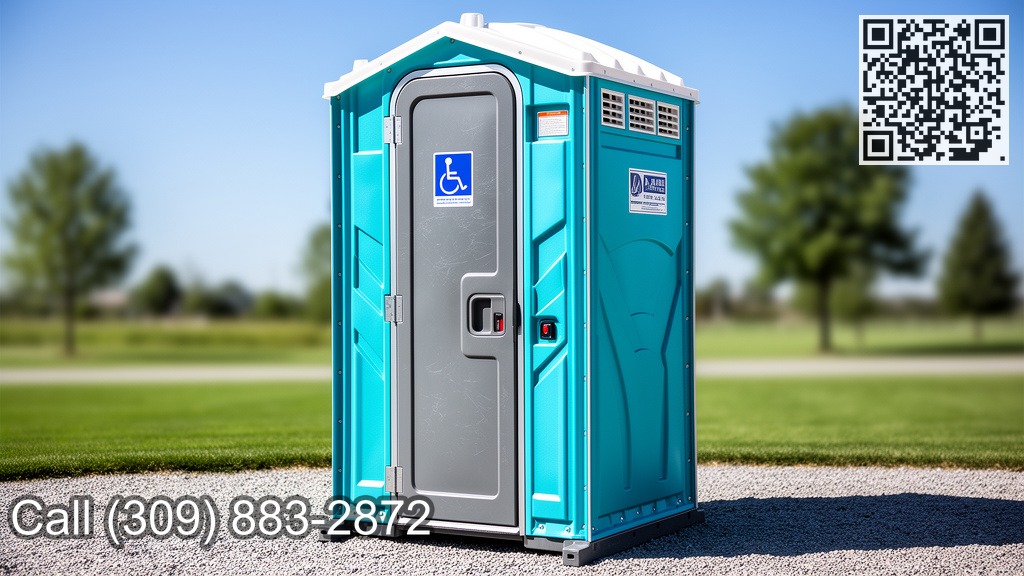
That is not the proper way to read the rule. The requirement applies to each collection. Because format, the phase collection requires an easily accessible device, the food supplier cluster needs an obtainable system, and the smaller collection near the youngsters's location need to additionally be reviewed as its own group. The rationale is straightforward. Gain access to must exist where the washrooms are given, not be consolidated in a remote edge of the event.
This is the kind of issue that never ever shows up in advertising makings, yet it figures out whether guests can in fact make use of the facilities that were rented for them.
Accessibility is not a luxury add-on
In some rental conversations, the accessible system still obtains reviewed as though it were a premium feature, like updated surfaces or a vanity sink. That framework is both unreliable and unhelpful. An ada compliant mobile commode is part of baseline access when the requirements require it.
Treating ease of access as an add-on tends to create two poor practices. The very first is waiting to see if the spending plan "permits" for it. The 2nd is positioning the easily accessible system in a marginal location because the prime areas were appointed initially. Both behaviors lead in the wrong direction.
An elder approach is to build accessibility into the initial draft of the cleanliness plan. When you do that, the rest of the logistics generally come to be easier. Paths are clearer. Collection placement is a lot more calculated. Signage and web traffic circulation make even more feeling. You stay clear of https://landenvrht111.terracolumn.com/posts/ada-handicap-easily-accessible-portable-restroom-rental-essential-conformity-factors the shuffle of trying to retrofit accessibility in the final 24 hours.
The broader compliance climate is approaching much more analysis, not less
Even if somebody wants to assume directly regarding mobile cleanliness, the bigger compliance atmosphere is worth observing. ADA needs are being applied in a wider landscape across markets. The Division of Justice's 2026 assistance extending the deadline for certain state and local government internet and mobile ease of access regulations to April 26, 2027 for bigger entities is one example of that bigger pattern.
That assistance has to do with digital availability, not mobile bathrooms. Still, it shows something crucial. Access compliance is not fading right into the history. It continues to be an energetic component of how companies are expected to offer the public. For event coordinators, municipalities, location drivers, and service providers, that means bathroom availability should be viewed as one item of a bigger conformity and incorporation picture.
The old routine of treating gain access to as a niche concern is obtaining tougher to defend. Individuals are paying attention, and they ought to be.
Where great intentions commonly drop short
Most accessibility failures in mobile commode leasings are not the result of open hostility. They originate from assumptions.
One presumption is that a larger unit needs to immediately be compliant. One more is that a person obtainable unit somewhere on site suffices. One more is that momentary usage softens the rules. An additional is that shipment crews can address route troubles on the fly when they show up. Those assumptions can all appear sensible in a rushed preparation conference, and all of them can produce a configuration that does not work.
The much better routine is to decrease at the right moment. Except hours, simply enough time to ask what access will certainly resemble from the guest's point of view. Can the person reach the unit? Can they recognize it? Can they enter it? Can they navigate inside it? Those appear concerns, but they punctured a shocking amount of confusion.
A brief preparation check prior to you rent
If you desire one sensible display for an ada portable bathroom leasing, use this before the order is completed:
- Count each washroom collection separately and use the 5 percent obtainable need to that cluster.
- Confirm the obtainable device is actually compliant, not simply oversized.
- Check that the path and entry to the unit will come, consisting of any required ramps or landings.
- Make sure the device will certainly show the International Icon of Accessibility.
- Review placement early sufficient that access is constructed right into the website plan, not improvised on distribution day.
That list is easy, yet it covers the errors I see duplicated most often.
The human side of the rule
Rules can start to sound abstract when individuals talk only in portions and technological terms. The human truth is much easier to recognize. A bathroom is not optional framework. At an occasion or public gathering, it influences whether individuals can stay, take part, function, volunteer, or enjoy themselves without anxiety.
For a moms and dad assisting a grown-up youngster with a flexibility impairment, an easily accessible mobile bathroom can be the distinction between attending and staying at home. For a veteran making use of a mobility device at a memorial occasion, it can mean the difference in between being welcomed and being sidelined. For an older adult whose equilibrium is not what it once was, sufficient handling area and a secure entry are not minor comforts. They are what make independent usage possible.
That is why the 5 percent guideline should have more regard than it normally obtains. It is a minimum that acknowledges an evident truth: if mobile bathrooms are provided for the public, a few of those toilets should come in each collection where they are offered.
When planners take that seriously, people notice, usually silently. The occasion feels simpler. The site really feels more thoughtful. Guests invest less time analytical and even more time participating. That is what good accessibility does. It removes friction prior to it develops into exclusion.
Getting it appropriate is normally simpler than repairing it late
The great information is that compliance here is not mystical. The bottom lines are clear. A minimum of 5 percent of systems in each cluster must be accessible. Short-term occasions are consisted of. Obtainable devices have to be related to the International Symbol of Availability. They should have an obtainable course and entry, and any essential ramps or landings need to fulfill ADA technological requirements. The units themselves must satisfy the appropriate toilet-room technical rules, consisting of clearances, transforming space, and appropriate grab-bar and water-closet requirements.
That might seem technological, yet in practice it comes down to care, intending, and a desire to think from the individual's viewpoint. If you are renting out ada compliant portable bathrooms for an event or public-facing website, access should be resolved as early as quantity, servicing, and placement.
People seldom keep in mind the portable bathrooms at a well-run event, which is typically a good indicator. It means the centers worked, individuals discovered them, and nobody had to work out unnecessary barriers just to satisfy a basic need. For available guests, that average experience is exactly the point.
 Ask ChatGPT
 Ask Grok
 Ask Perplexity
 Ask Claude
 Ask Google AI
 Ask You